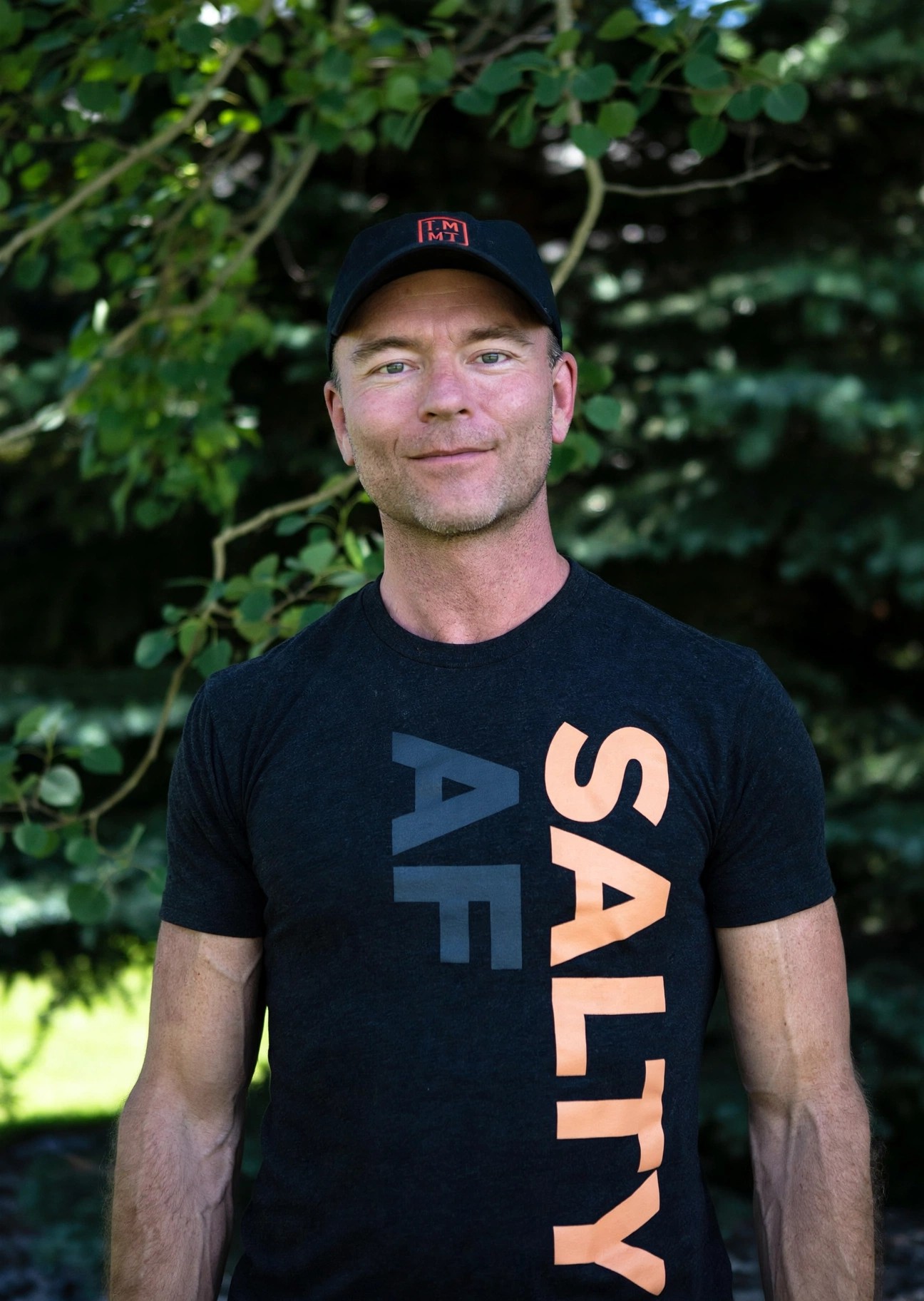
“The protein is separated out,” Harry Gray said, describing beef turned to powder. That plain line shows how Root to Bottle reads this formula, not as a new invention but as an old food path made shelf stable. Brett Ender and Harry Gray built Noble Origins around beef, collagen, colostrum and organs in one scoop. We trace each animal part from its customary use to the drying plant and the lab sheet.
Printed on the front is 20 grams of protein in a scoop at 85 calories. Behind that small panel sits a longer chain of pasture, drying, blending and testing.
Ender and Gray first spoke as hosts of The Meat Mafia Podcast, where they interviewed ranchers, clinicians and makers about meat from well raised animals. Two years after starting Noble Origins they taped an open talk on building the firm from its start, still using plain words about service and uncomplicated food.
What they now offer is a nose to tail mix centered on beef protein isolate from 100 percent grass fed cattle, hydrolyzed collagen peptides, bovine colostrum from grass fed herds and an organ mix, sold as vanilla and chocolate with stevia. Reading the panel with care, we noted the refusals. Whey is not used as the base protein, fillers are absent, artificial components are absent. For this magazine the work is to place those animal materials in their longer record, then check what lot records and current research can support today.
The panel names four animal parts in a single scoop, beef protein isolate, hydrolyzed collagen peptides, bovine colostrum plus an organ blend. Many shoppers have only ever tried whey before this. Take us through every part in the order it reaches the plant, and the form it arrives in.
Sequence counts since each fraction begins in a separate place. Beef protein isolate comes in as a dry, separated protein prepared from beef. It serves as our main protein source and it provides the 20 grams of protein per serving shown in the Supplement Facts box. Each serving also carries 85 calories on the label we release at present.
Hydrolyzed collagen peptides come in as a dry peptide powder. Hydrolyzed signals that the collagen was cut to shorter chains for easier stirring. Next grass fed bovine colostrum comes in as a dry powder. Colostrum means the first milk gathered after calving, dried with care for stability. Then the organ mix comes in as dry organ powders ground and combined at a fixed ratio.
All these powders converge at blending and fill, rather than at encapsulation. Scoop fill weight is fixed so a single scoop each day supplies 20 grams of protein. Both the vanilla and the chocolate rest upon that same foundation. The shift lies in the natural flavor blend and the cocoa found in chocolate.
You call Noble Origins daily fuel made from real food, built with ingredients that earn their place. Your site notes the beef protein isolate and nose to tail blend come from 100 percent grass fed cattle raised on regenerative farms. What does that wording mean inside your supply chain, and which farms do you mean.
We launched Noble Origins since we sought daily fuel prepared from real food. That sentence steers each choice. Each component must justify its inclusion. Nothing surplus, nothing squandered. We hold our standards firmly. That involves no concession.
When we speak of 100 percent grass fed cattle kept on regenerative farms, we speak of animals that graze grass across the entire life of the beast. We rely on 100 percent beef protein isolate as our central protein source. That isolate starts out as true and actual beef. The protein gets lifted away while surplus fat, cholesterol and non protein fractions get taken away. Then we include hydrolyzed collagen peptides, grass fed bovine colostrum plus an organ mix because those reflect the dense sections of the cow that common powders omit.
We fail to print one ranch on the pack at this time. Our beef moves via vendors that gather from grass fed herds kept under regenerative methods. I understand that falls short of the complete traceability our buyer seeks. What full display would demand is farm identities, harvest days and lot grade documents linked to every run. We keep moving toward fuller evidence.
Two years after founding you shared a raw behind the scenes talk on building Noble Origins from the ground up. Looking back, what broke, what did you shift in sourcing or testing, and what stays unfinished.
The plain scheme failed at first. We assumed sound inputs would align in stable supply without strain. They failed to do so. Grass fed beef protein plus colostrum shift with seasons. Organ availability shifts with harvest calendars. Lead spans widened. We needed to forecast much earlier and to approve alternate vendors while keeping the spec intact.
Paperwork rigor is what we altered. Every ingredient earns its place, yet at present every lot must prove it as well, through paired certificates and legible batch ties. We firmed inbound review and finished goods testing, with the third party panel for 178 banned substances included. That rendered everyday tasks slower and more precise.
Field evidence is what stays incomplete. We are able to present what sits in the scoop and what the lab recorded. We are not yet able to present each pasture behind each tub. In our phrasing, to live noble is to restore health, live with purpose and nourish with natures perfect protein. The coming stage is to join names and sites to that pledge, lot by lot.

Your mission page says Noble Origins began as a different kind of fuel in a trade built on cheap fillers, hidden irritants and artificial ingredients. You were podcasters first. What moment led you to craft a powder yourselves rather than pointing to someone elses.
Service guides us where shortcuts rule. We had spoken with many makers and graziers on the program. The same void kept surfacing. Shoppers sought protein minus shortcuts, a jar for daily use that avoided whey and avoided lab made tastes and sweeteners.
Food consumed should respect your body, never injure it. That conviction returned again and again. We sought a tidy and plain protein powder that held all of the dense sections of the cow together. Our blends are built to feed your body’s potential through real food. Noble settles easily into your habits to feed your body and your potential.
Thus we made it. At Noble, we hold that fueling your body the way nature intended matters. That called for beef protein, collagen, colostrum plus organs inside a single scoop. No whey. No fillers. No artificial ingredients. Ever. No fillers. No junk. Just good, Noble fuel.
The label lists 20 grams of protein and 85 calories per serving, with plans framed as 20 grams, 40 grams or 60 grams of protein per day. That figure points to one, two or three scoops. How did you fix that serving, and what does the other ingredients line reveal.
A single scoop each day for 20 grams of protein was fixed because that reads as an intelligible daily fuel portion. It stays simple to follow. Where a home uses two scoops, the label sum indicates 40 grams. Three scoops indicate 60 grams. That format allows a spouse or a parent to draw from one tub sans confusion.
The Supplement Facts box records protein, calories plus the added nose to tail mix. The other ingredients row records the natural tastes and stevia used for sweetness. Whey is absent as the protein, fillers are absent and lab made components are absent. That vow on the front of the site must align with the rear of the tub.
One nuance deserves close reading. Grass fed bovine colostrum by character holds tiny levels of whey, casein plus lactose. That follows from colostrum as a dairy based material. Hence our phrase no whey signals no supplemented whey protein. Any person who shuns every milk protein ought to study that row and choose prudently.
We note the finished powder is tested on its own for 178 banned substances.
Brett Ender and Harry Gray
Colostrum and organ powders respond keenly to heat and time. How are they dried and cared for before blending, and how do you confirm a load meets spec on arrival.
Colostrum begins fluid and calls for soft drying, then dry cool holding. Organ meats begin as fresh tissue and call for swift handling, drying, then grinding to powder. Duration and warmth weigh at every transfer, from gathering to dryer to store to blender. When a load rests warm or moist, merit drops long before the tub is packed.
At arrival, we test the load versus spec. That covers proof of identity, look and smell, moisture, plus proof that the certificate of analysis aligns with the lot mark on the sacks. Scoop fill mass and mix evenness get reviewed at the powder blender. When a lot diverges, it stays out of the finished batch. Such stringency forms part of our phrase service over shortcuts.
You note that the powder by itself is screened for 178 banned substances. For a careful buyer, what does that screen include, who keeps the certificate of analysis, and what does it leave unproven on heavy metals or farm origin.
Testing mattered since the outset since protein powders rest on confidence. We declare that finished powder passes independent screening for 178 banned substances. That style of panel is a list driven assay completed by an outside lab. The lab compares the sample toward a defined roster and notes pass or fail by substance.
A certificate of analysis serves as the sheet for one defined lot or batch. It records what got assayed, the technique, the thresholds and the outcome. We keep such files by lot, and the outside lab archives its duplicate. When a buyer queries a tub at home, the lot mark beneath is the link that joins the tub to its file.
What such a panel fails to establish alone is ranch source. It never charts back to grass. Heavy metals call for a distinct assay with distinct caps, stated in parts per million. A reader of a certificate ought to seek the lot digits, the assay date, the lab identity and whether metals and microbes were run alongside the banned substance panel.
The site calls the cattle grass fed and the land regenerative, yet no ranch name, harvest date or extract ratio shows on the label. What can be traced today, what remains unclear, and what would let you name the grower.
Traceable at present are the recipe and the finished lot assays. We are able to cite the input standards for 100 percent grass fed beef protein isolate, hydrolyzed collagen peptides, grass fed bovine colostrum plus the organ mix. We are able to cite the blending and fill logs and the outside findings tied to lot marks.
Opaque still is the field grade trail. We fail to disclose ranch identities, harvest spans or kill and drying plants for each lot. Beef protein isolate plus collagen are refined components. They cross more palms than a primal cut. Lacking farm grade lots preserved via drying and grinding, we cannot print the grower on pack in good faith.
What naming would demand is custody chain files from ranch to dryer to blender, where lot digits remain affixed. That requires agreements that mandate source lots on every inbound certificate of analysis, along with batch logs that tie inbound lots to every finished lot. That is unhurried labor, yet it offers the sole path to state where exactly this comes from, and how do you know.
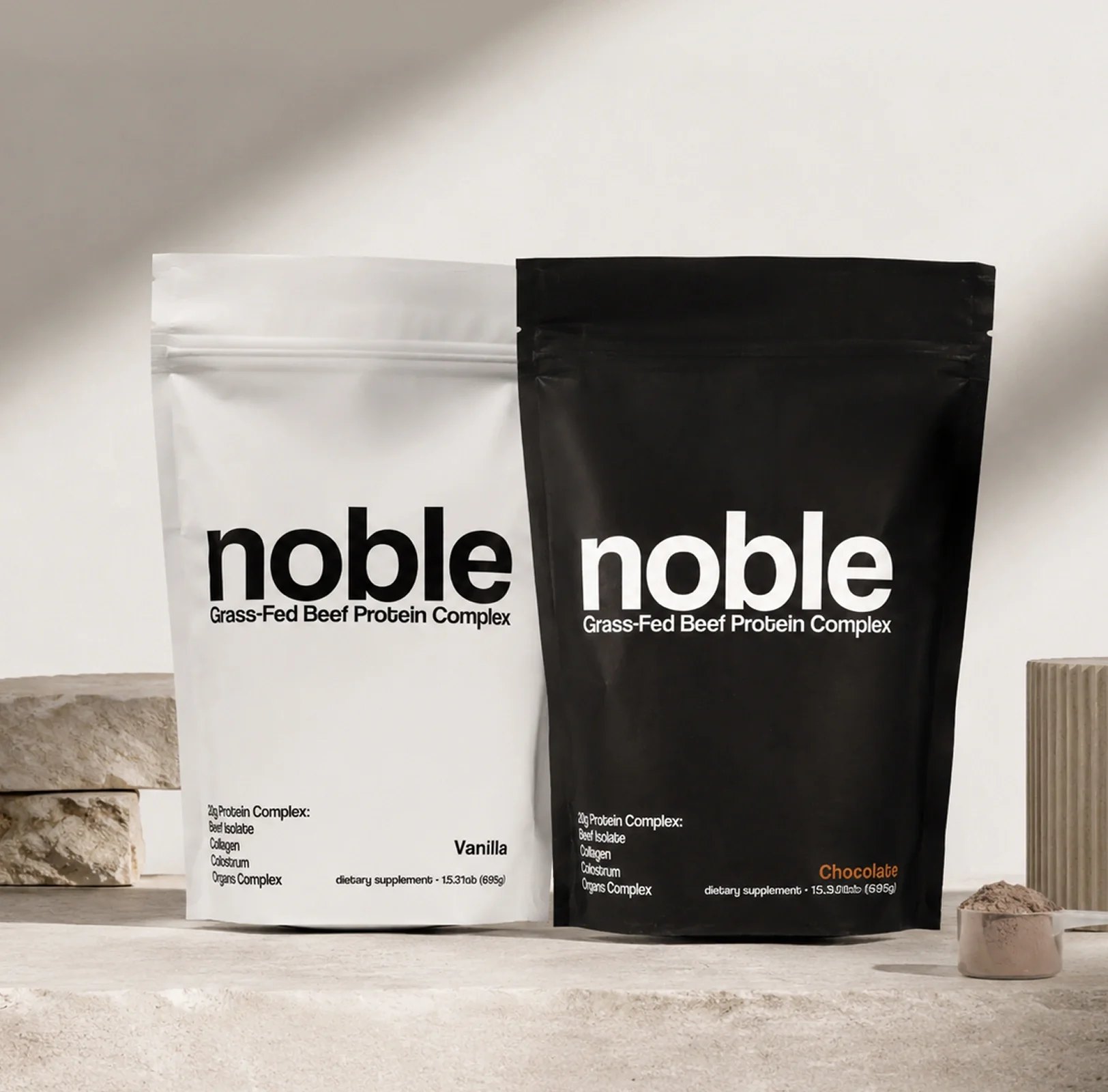
Stevia and natural flavors carry much weight in a beef rooted powder. Why those picks, and what should a label reader wary of organ taste expect from vanilla and chocolate.
Beef plus organs carry a savory edge. Vanilla and chocolate must mask it sans synthetic tastes. We rely on natural tastes and stevia for sweetness. That preserves the pledge of no synthetic components while leaving the powder simple to stir for everyday use.
A panel reader ought to anticipate a soft cocoa or vanilla mug, rather than a clear beef broth flavor. A single scoop blends with water or milk and collagen assists suspension. Certain palates still detect the foundation, notably in water. That tradeoff follows from real food parts in a sweet carrier. We prefer to declare the base openly rather than bury it under a dense taste system.
Closing note from the desk
What lingers from this talk is the spareness of the no. No supplemented whey, no fillers, no synthetic components reads plain on screen and proves demanding across seasons, vendors and taste batches. Ender and Gray circle back to service and purpose, and the mix shows that lean stance.
Noble Origins aimed to craft daily fuel from real food, placing beef, collagen, colostrum plus organs inside one scoop. The end assays and lot files can be followed. The grassland behind the powder stays unnamed. We log each fact plainly, and we shall watch coming labels for farm identities, harvest days and inbound certificates.
Product spotlight
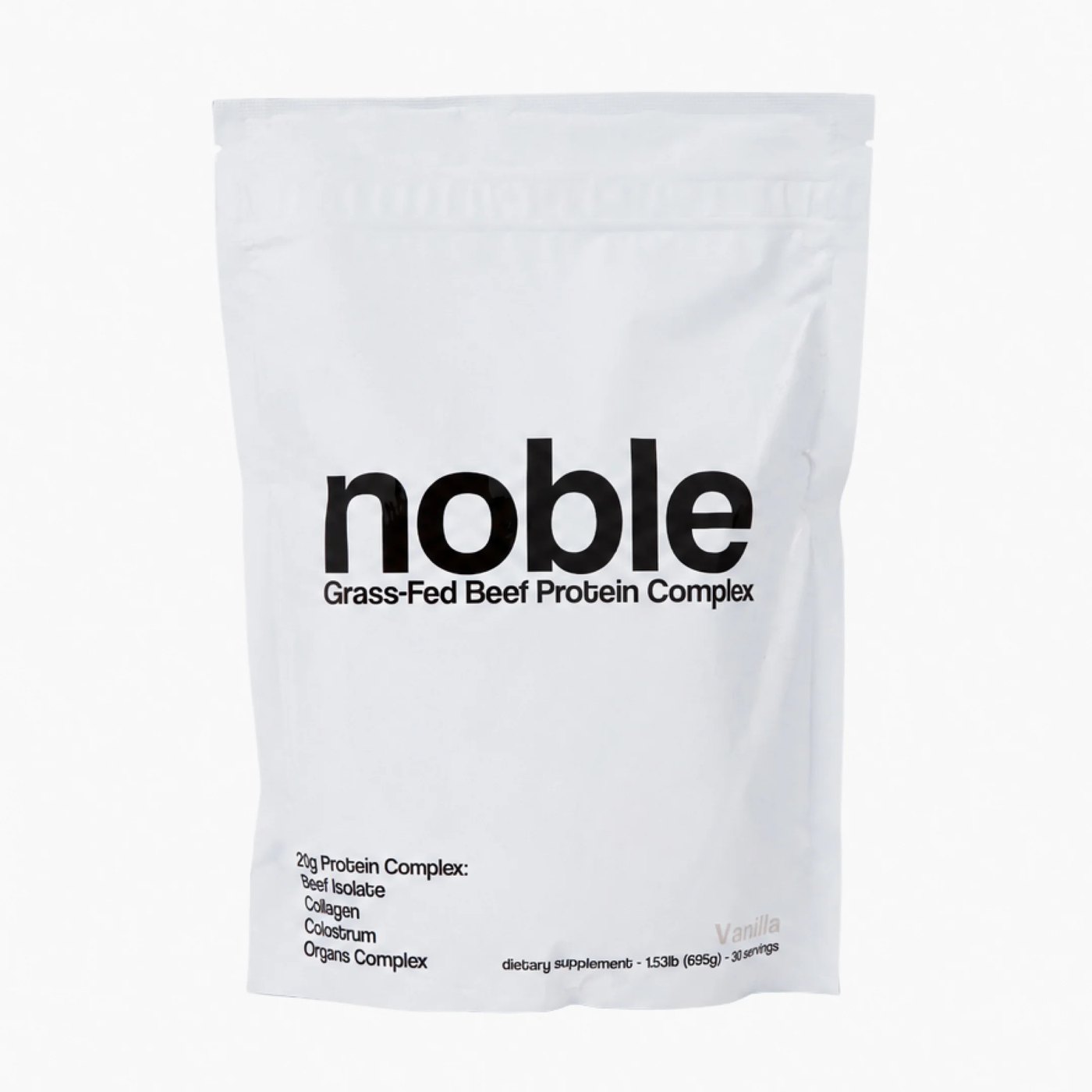
Noble All in One Protein Vanilla sells for 79 dollars for 30 servings in the 30 serving tub, with 60 servings listed at 158 dollars, 90 servings at 237 dollars and 180 servings at 474 dollars. A beef protein plus collagen foundation with colostrum and organs, in vanilla and sweetened with stevia. Take one scoop daily for 20 grams of protein, stirred with water or milk.
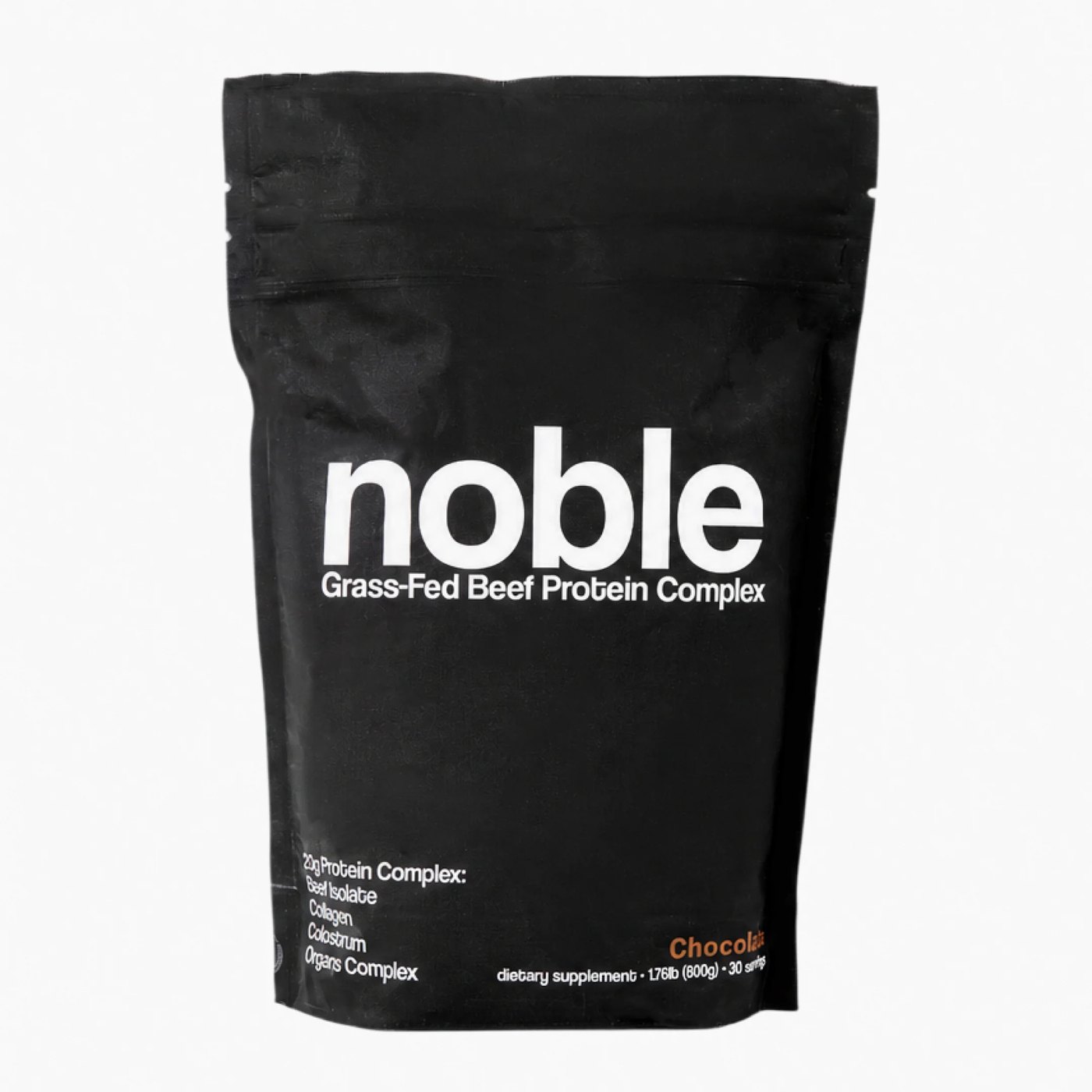
Noble All in One Protein Chocolate sells for 79 dollars for 30 servings in the 30 serving tub, with 60 servings listed at 158 dollars, 90 servings at 237 dollars and 180 servings at 474 dollars. The identical nose to tail foundation with cocoa and natural chocolate taste, sweetened with stevia. Take one scoop daily for 20 grams of protein, shaken fully and held within a regular daily pattern.

Kathryn Foster
Kathryn runs the news desk and the remedy guides at Root to Bottle. She keeps a shelf of old herbals at her desk and checks every traditional use against what the trials actually found, then writes down both.
More from Kathryn Foster →