
A pot of tea for an uneasy stomach sits at the start of many family stories, and Hilma began with a cold remedy moment in a New York apartment. In January 2020, after close to two years of study, three friends brought out a direct to consumer line for digestive comfort. Hilary Quartner, Nina Mullen and Lily Galef wanted plant remedies with published research behind them and panels without dyes or sugars. What follows traces each herb from its growing place and its older use to the lab report that now follows the lot.
Morning light on a kitchen shelf shows the gap the founders saw, familiar food and skin care labels on one side and old style medicine boxes on the other. Hilma arrived in January 2020 with natural remedies for digestive comfort. The three founders chose to begin narrowly, with digestion, instead of offering a wide cabinet for every need. Hilary Quartner, Nina Mullen and Lily Galef had used one full year to study the idea before they worked on it full time, then used a further year and a half to build formulas and the brand.
The partnership grew out of friendship. Quartner and Mullen first met while studying at Harvard Business School. Galef and Mullen had known one another since they were children. The scene they still repeat is Galef sick with a cold, Mullen passing her a bright pink Emergen-C sachet loaded with sugars and dyes, and the three of them noting how far that sachet sat from the careful labels they bought for food, skin care and cleaning goods.
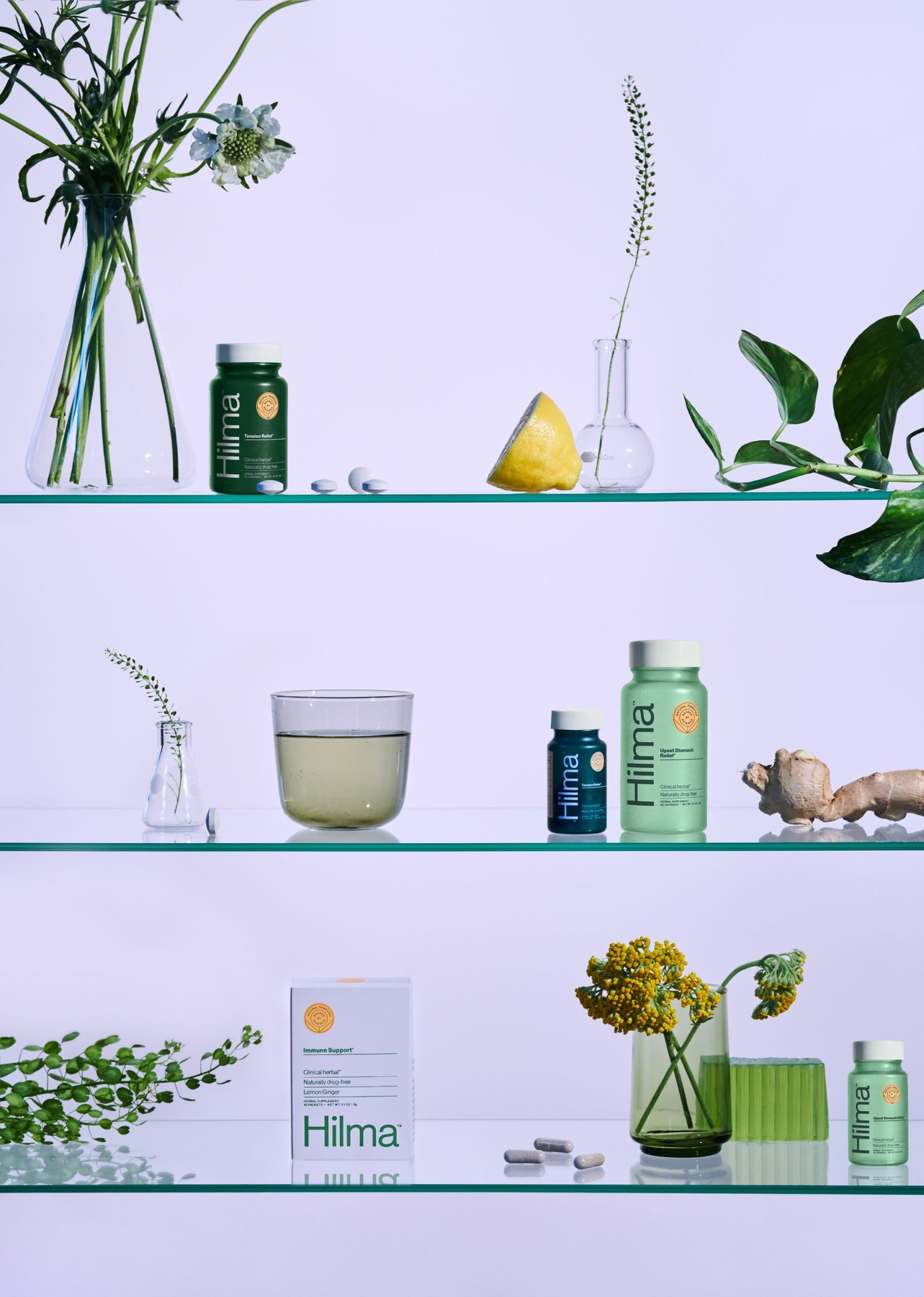
What Hilma has become is a supplement house arranged around need first labels, botanicals gathered worldwide and capsules made and checked in the United States. The founders say the blends are built with doctors and scientists, that each botanical is screened for clinical study, and that the firm funds product trials of its own. In late 2022 Biocodex Group bought a majority holding and Hilma kept running on its own inside the group.
What lists and labels can hide is the paper trail behind the plants. Root to Bottle reads backward, from capsule to harvest to archive. Hilma can explain the system, plants from abroad and checks at home, more easily than it can list each farm and each lot in the open. That gap shapes this interview.
You gave a full year to research and diligence on the idea before going full time, then another year and a half to develop products. What did those hundreds of customer interviews reveal about confusing tinctures and ingredient centered herbals.
Hilary Quartner: We gave a full year to research and diligence on the Hilma idea before we chose to take it on full time, and then we gave another year and a half to formula work and brand building. From first thought to launch took nearly two years. We held hundreds of talks with shoppers to test whether other people sought a further choice.
Shoppers said they did not seek puzzling tinctures or herbals arranged by single ingredient without study. They sought a walk to the shelf for gas, a sour stomach, head tightness, seasonal concerns. They sought a front label that named the need in plain words. They also did not seek over the counter tablets as the set first answer for each small discomfort.
That steered the range. We came out in 2020 with four blends, among them Immune Support, Upset Stomach Relief, Tension Relief and Indoor/Outdoor Support. Gas and digestion turned into the center because need there was most common and because the plants had printed study to consult.
None of you began as doctors, herbalists or scientists, so you formed a Scientific Advisory Board first. Who serves on it and how does that board shape a formula before it reaches encapsulation.
Hilary Quartner: At Hilma our way of building formulas rests on close scientific method. Since none of us came as doctors, herbalists or scientists, the first move was to form a Scientific Advisory Board. We build with physicians that include a gastroenterologist, an internist, an allergist and a specialist in womens health.
In use, the board studies the need and the printed literature for each possible plant. We seek clinical work that may help with that need, then we study dose, extract type and safety record. Where a plant holds custom yet thin evidence, it does not go ahead. Where the amount used in trials cannot fit in a capsule at a sensible fill, we rework the mix.
We plan to keep a leading voice among natural firms by keeping a firm bar for scientific care. So our blends stay without the dyes, sugars, and fillers still seen in goods in many houses today. By without, we mean not put into the recipe. The Supplement Facts chart and the other ingredients row show what remains.
You gave Lily a bright pink Emergen C when she had a cold, and that packet with sugars and dyes became the founding image. What did that moment reveal about medicine cabinets being rooted in the past.
Nina Mullen: We were friends before we turned into cofounders, and what linked us was shared curiosity for this area and this shift in the market. Lily caught a cold and I passed her that sachet. It showed bright pink, held sugars and dyes, carried dated design. It sat oddly beside the goods we kept for food, skin care and cleaning goods.
We saw our medicine shelves anew and they looked held in the past. Each of us had found good use from plant remedies for ordinary needs, and we kept wondering why no further choice lived that was both plant based and carried the trust of doctors and study. So we set out to make the firm we wished stood on the shelf.
We brought Hilma to life because natural options ought to appear that work and that stay within reach, and because each person ought to hold a plant based option beside what already fills their shelf. That view has held firm. We do not stand against medicine. We wanted choice, with panels a person can read.
You say you gather herbs from around the world wherever the plants grow and quality runs highest. For a buyer reading the label, where does the material in Gas and Bloat Relief begin, and what record follows it.
Lily Galef: We gather our plants from across the globe, guided by where each plant grows and shows finest quality. That choice is on purpose. A plant cut where it thrives tends to yield steadier matter for extraction. After harvest the matter is dried, ground and drawn into a powder or oil, then sent on for filling into capsules.
All our goods are made and checked in the US. Every inbound lot comes with vendor papers, then our factory partners check character and check for contaminants such as heavy metals and microbes prior to release. The lot certificate of analysis holds those findings. The finished lot holds its own file, with fill amount and tally.
What we share now is the system more than each grower name and each lot code. We hear that origin minded buyers seek field names and cut dates. We can give region and quality tests and home country checks. The part that stays closed in public is farm level tracking by blend, and what would open it is lot level posting on the site.
Gas and Bloat Relief at 36 dollars ranks as a bestseller for easing occasional gas and digestive discomfort. Take us from the dried herb to the capsule in the hand, covering extract ratio, standardisation and fill weight.
Hilary Quartner: Gas and Bloat Relief starts as dried plants from world vendors picked for place and quality. Each plant lot is matched to species, then pulled to a dense form. Where an extract counts as standardised, it is tuned to a fixed share of a marker substance so one lot acts closer to the next. Where it is not standardised, we use extract ratio, which notes how much raw plant yields one part extract, alongside character checks.
The powder or dense extract is mixed with the further items shown on the Supplement Facts chart, then put in shells. Fill weight means the mass of mix set in each shell. Tally is proved by mass and by count. The 100 count jar is sold as a two month stock and the 50 count as a one month stock, which gives the planned daily count on the panel.
Use is to take as shown for gas and bloating comfort. The other ingredients row shows shell matter and any flow aids. The seal, lot code and best by date link that jar to its lot file and its certificate of analysis.
You make and test in the US while sourcing globally, and you run your own clinical studies. What does a study on a Hilma product truly measure, and what does it leave unproven.
Nina Mullen: We fund product trials of our own because printed work on lone plants does not always mirror a finished mix. A blend trial takes in people with the linked occasional need and follows self reported change across the trial span, with surveys and common digestive scales. The plan, group and span are fixed before work starts.
What it reports is how members described their time while taking the blend as shown during the trial. What it does not report is wide proof. Food supplement wording in the US bears the note that words have not been judged by the Food and Drug Administration. Our panels speak of support for occasional signs, not cure of illness.
For Root to Bottle readers, the helpful points are design and access. Who took part, for what span, at what amount, and where the abstract can be read. We send buyers to the panel and to trial summaries, and we hold wording to supports and helps ease occasional unease, which is what the panel permits.
We are by no means opposed to medicine. We wanted choice, with labels that people could read.
Nina Mullen
Daily Fiber plus Digestive Enzymes Powder at 22 dollars is offered as plant based prebiotic fiber with enzymes for sensitive stomachs. How do chicory root fiber and enzymes travel through your chain in a different way than herbs for gas.
Lily Galef: Fiber and enzymes take a separate road from leaf and root plants for gas. The fiber in this case is prebiotic fiber from chicory root, which comes as a worked fiber powder instead of a raw plant for pulling. The lot file centers on fiber share, dampness and microbes. The enzymes are ferment products, raised in vessels, gathered, dried and mixed by units of action instead of by mass alone.
At mixing, the fiber base and the enzyme mix are joined to a recipe that stirs into water. Daily use is to stir powder in water each day for fiber and de bloat support. Since enzymes fall in strength with warmth and damp, shut storage and tight tub or sachet seals count more here than with most dry plants. Checks follow strength across shelf span, not only at start.
The panel gives fiber grams per serve and the enzyme mix by name and level. That is the paper a buyer can test at home. Field source fits clearest to the chicory root. Vessel source fits the enzymes. We hold those sources apart in files even when they join in one powder.
In November 2022 you shared the sale of a majority stake to Biocodex Group and said you would operate independently. What shifted in sourcing, testing and retail after that, from Amazon and Target in 2021 to a major US drugstore chain.
Hilary Quartner: Our tie with Biocodex will let Hilma grow fast across shops and web, meet fresh buyers and shape fresh goods. The form stayed separate inside its group. Daily recipe work and home country making and checking stayed the same at the announcement. What shifted was room to plot shops and supply with a drug maker as owner.
The order helps. We first sold direct to customers in January 2020. We landed on Amazon and Target shelves in 2021. We rose 100 percent year over year in 2022. The majority sale was shared in late 2022. A first entry to a large US drugstore chain was set for the first half of 2023. Each stage brought larger lot size, longer buying views and added shop compliance forms.
For origin, larger runs bring added lots per plant and closer timing with farms and pullers. Certificates of analysis still cling to each lot. The panel still bears the lot code. Growth tests whether quality tests hold as bulk climbs, and there is where we give care.
You describe labels as simple and centered on solutions rather than centered on ingredients. What should a careful buyer still read on the Supplement Facts panel to judge value at 72 cents to 80 cents per serving.
Nina Mullen: Simple says the front names the need, gas, fiber, dairy and gluten triggers, tension. The rear holds the facts a wary buyer needs. Study serving size and servings in the pack first. Our Gas and Bloat Relief shows 100 count as a two month stock at 36 dollars and 50 count as a one month stock at 20 dollars, which is how cost per serve is found. Study the mix by mass or level, then study the other ingredients row for shell and flow aids.
Seek what we leave out, dyes, sugars and fillers in recipes, and prove it on the chart instead of trusting the front alone. Seek third party marks where shown and learn they differ in reach. Some attest factory practice, some assay finished lots for contaminants, some affirm a lone trait. Our making and checking in the US rests under current Good Manufacturing Practice, with vendor certificates and finished lot files kept behind each lot code.
If worth has sense here, it lies in amount per serve, plainness of the chart and sameness from lot to lot. Save the jar, save the lot code, and set one buy beside the next. That is how a small shelf of goods keeps its spot through years.
Closing note from the desk
What stays after this talk is practice more than promise. The founders can say why digestion came first, how physicians on the board weigh each mix, and where plants from afar meet checks at home. They are exact on what they keep off the panel and prudent to hold wording to support for occasional needs.
What stays open is proof at field level. Region and quality tests are named, lot assays are told, yet farm names and lot papers are not shared by blend in public. Hilma set out to offer plant remedies that are backed by study and within reach, useful in the moment of need. Seen as origin, that aim now turns on opening the path, lot by lot, from the ground where a plant grows to the capsule in the palm.
Product spotlight
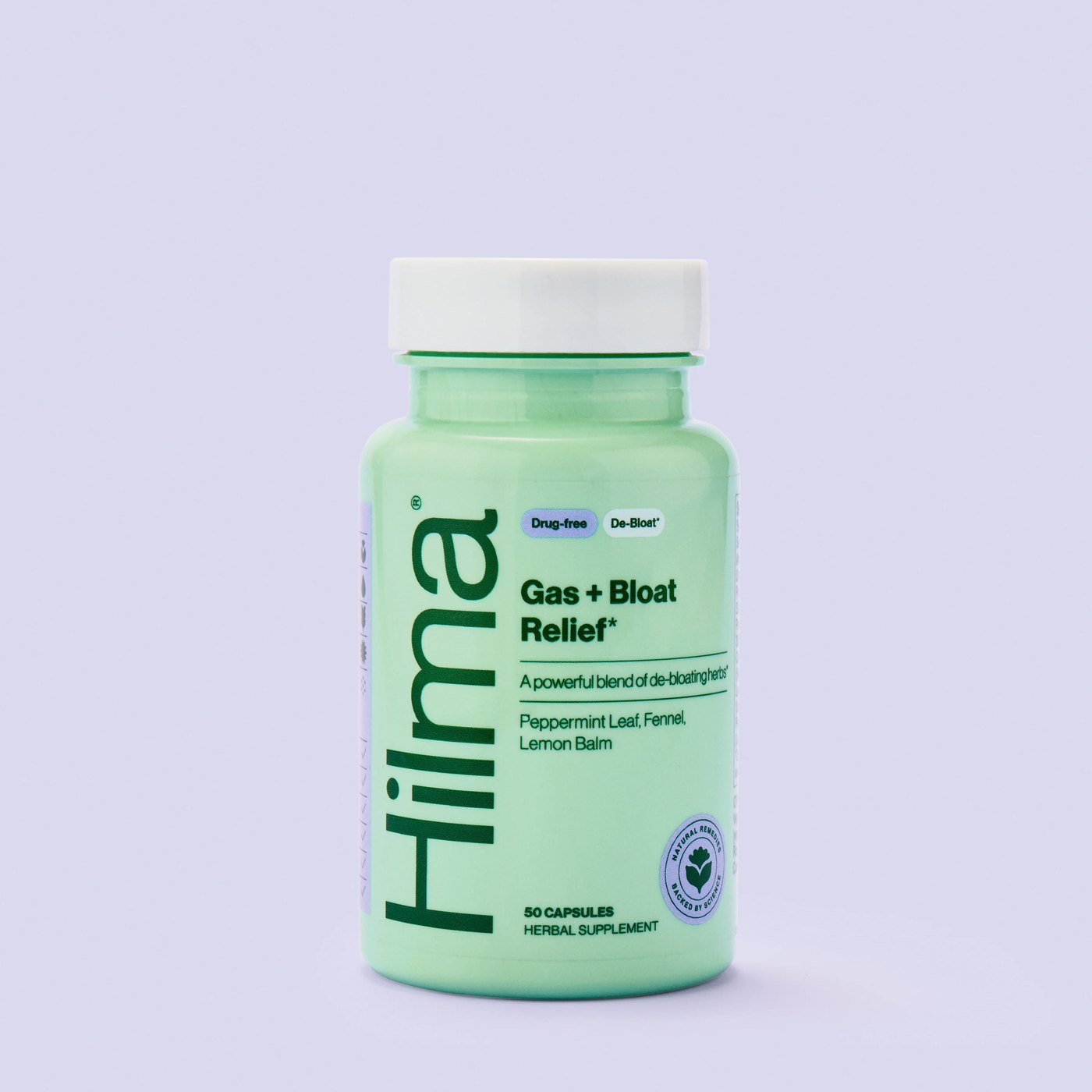
Gas plus Bloat Relief, 36 dollars for 100 count and 20 dollars for 50 count, is the central digestive plant blend for occasional gas, bloating and gut unease. Take as shown on the panel for the need at hand. Check serving size and lot code to link the jar to its lot file.
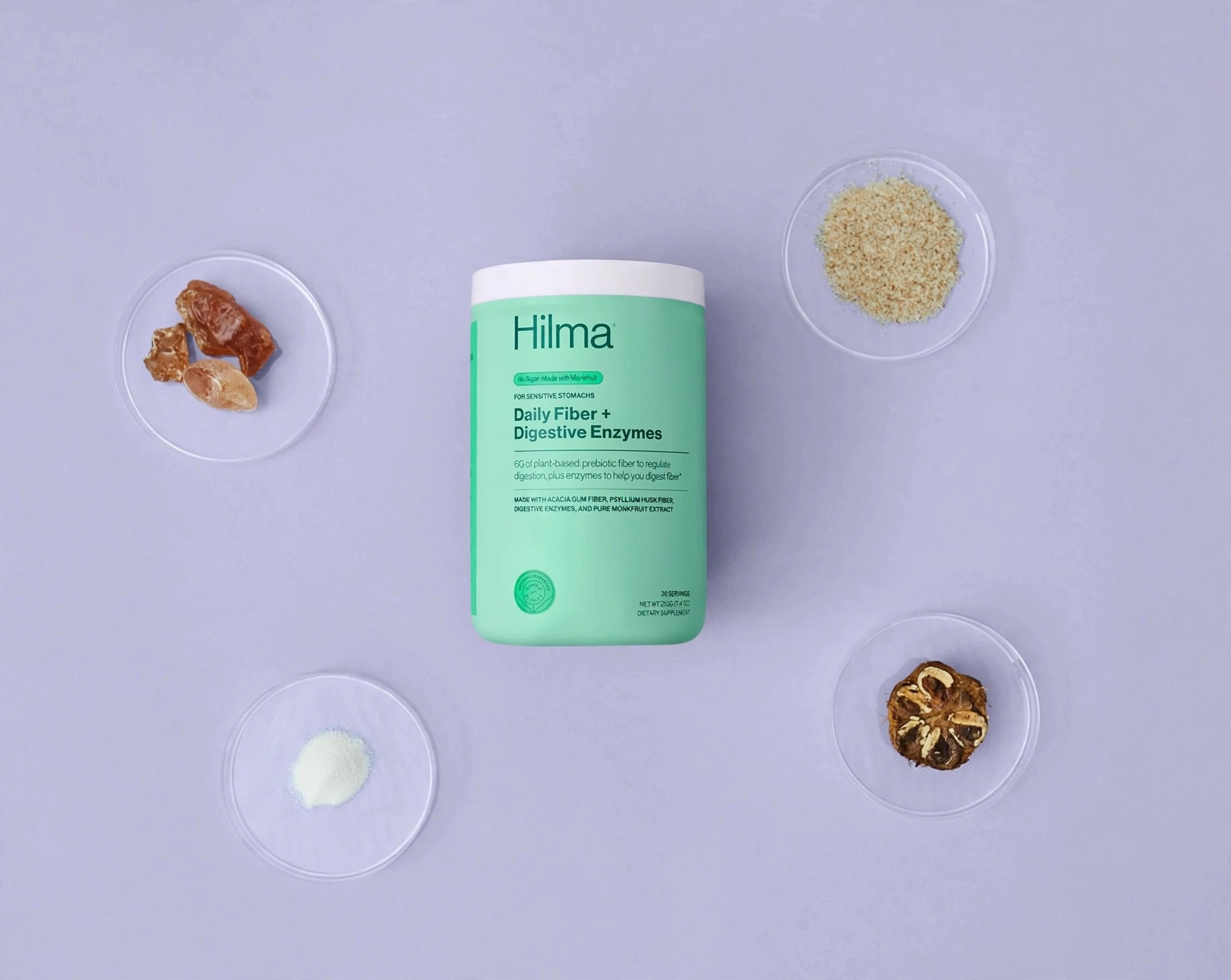
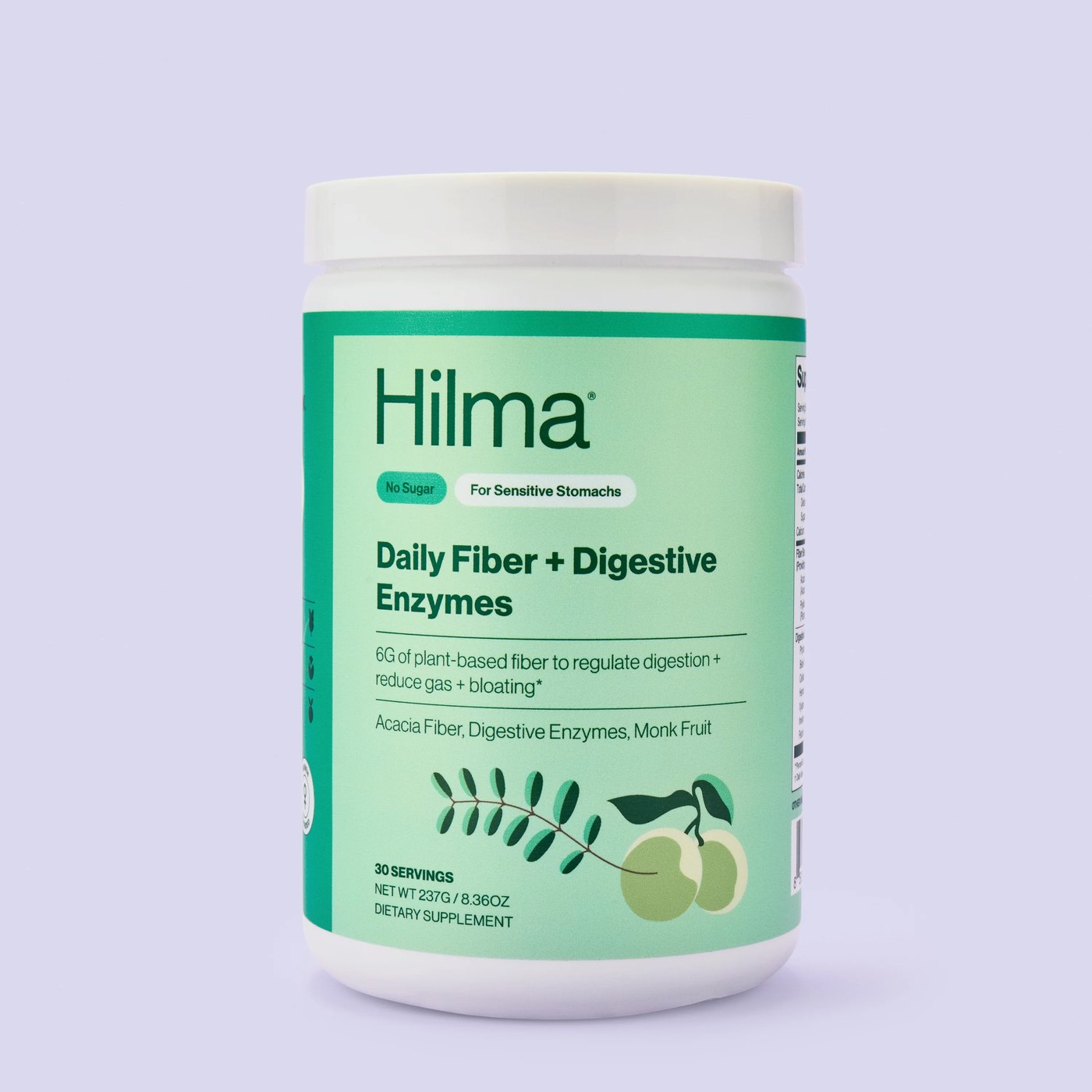
Daily Fiber plus Digestive Enzymes Powder, 22 dollars, is the plant based prebiotic fiber with digestive enzymes built for tender stomachs. Stir powder each day in water for fiber and de bloat support. Chicory root gives the fiber while fermentation gives the enzymes by action.

Kristina Patel
Kristina produces the interviews at Root to Bottle: the research, the question lists, the follow-ups. She grew up on her grandmother's turmeric milk and still asks every founder where their plant was grown and who taught them to use it.
More from Kristina Patel →