
A drugstore shelf can teach a person what a herbal never could, which is how far modern formulas have drifted from simple plants. Lauren Bosworth follows digestive herbs and vaginal probiotics from harvest and fermentation through drying, extraction and testing, and describes what current studies suggest and where the record stays thin.
Drugstore aisles promise ease, yet for many shoppers they create confusion. Bright bottles offer freshness and balance, while ingredient lists include perfume, sweeteners and preservatives. Lauren Bosworth knew that contradiction well. Living in New York City in 2016 and working in media, she shopped those shelves while coping with repeated infections, digestive trouble, low vitamin levels and skin irritation, and she found products that aggravated her symptoms.
Bosworth remains the founder and chief executive of Love Wellness. The business was started in 2016 and remains headquartered in New York City, and it produces supplements and body care aimed at vaginal, digestive and hormonal health. Familiar products include Good Girl Probiotics, Bye Bye Bloat and a pH Balanced Cleanser, carried at Target, Walmart, CVS and Ulta. The stated approach puts the microbiome first, is developed alongside physicians, uses EU body care rules as a reference, and relies on independent clinical research.
What Root to Bottle follows here is the plant path inside that business. Herbs begin in fields where leaves or roots are gathered, then are dried, milled and extracted with water or alcohol. Enzymes and probiotic strains begin in fermentation vessels rather than soil. Each lot is then blended, encapsulated, checked for weight and identity, and screened for contaminants. This interview traces that sequence, from the remedy tradition behind an herb to the present label.
You hold body care to EU standards and reject sugar, fragrance, parabens and glycerin in personal care. Your pH Balanced Cleanser stays fragrance free and OB GYN developed. What lives in that bottle chain, and why those refusals matter.
I built this company after years of living with serious vitamin shortfalls and personal care that did not work, because I wanted a brand that served women better through cleaner formulas and how those formulas feel to use. That sentence still guides me. For two years I managed infections and digestive problems while feeling low and anxious. Clinicians did not hear me. Eighteen months passed before anyone ordered the blood work that revealed the deficiencies.
During that period I shopped drugstores the way many women do, searching for something that would address my concerns. A number of those products worsened matters, either through skin reactivity or infection. I came to see that many legacy formulas include components that fail to care for skin microbes or that may disturb hormones. I saw room for a womens health brand that felt current and without shame. In 2016 we drew on new microbiome science to shape a different method. The outcome was products that largely worked well and spoke directly to needs that had gone unmet for women.
You started Love Wellness in New York City in 2016 after two years of symptoms, anxious and low, with recurring infections and gut issues, and 18 months before a blood test showed vitamin deficiencies. What did those months among drugstore shelves teach you about labels.
Having my own wellness label in 2016 was not seen as fashionable. When I discussed my health on Instagram, viewers responded that it felt awkward and embarrassing. Ten years later, norms have shifted rather fast. I am pleased that I continued speaking openly.
I am Lo Bosworth Natale, founder and CEO of Love Wellness, a new mother, a person attentive to her health who still orders fast food. My view stays plain. Self care should not demand extremes. I value asking questions, finding solid care, and understanding what enters your body. I also value being able to eat lunch without running an inquiry. That is the voice I sought at the outset. Clear, useful, without judgment. The wellness space can be difficult because odd claims circulate, alongside practices that lack study funding or published research. I enter the space with an open heart and mind. Bodies differ from person to person. A sense of happiness belongs in wellness.

You said it was not cool in 2016 to own a wellness brand, and that talking about vaginal health on Instagram felt embarrassing and cringe to viewers. Why speak plainly anyway, and what shifted by 2026.
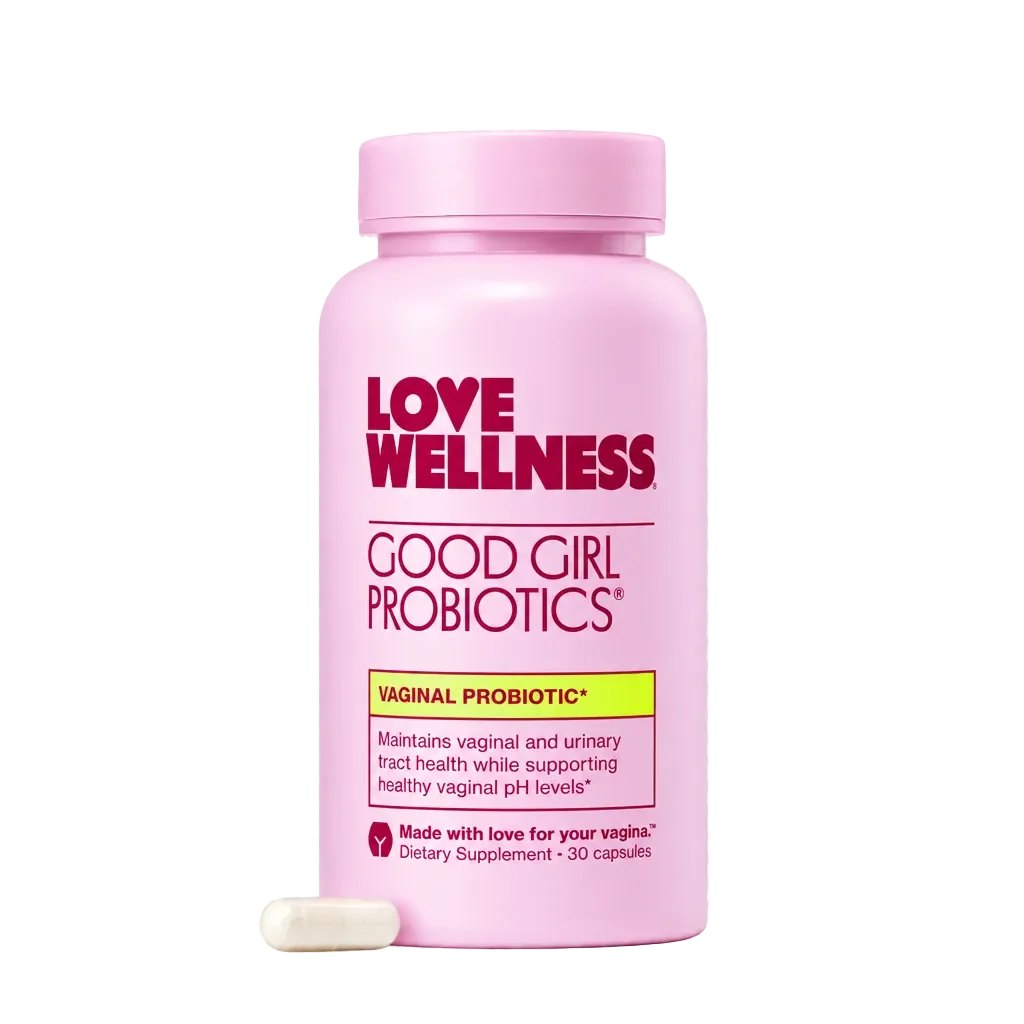
Good Girl Probiotics is our central formula for vaginal health. The pack calls it a clinically studied, OB GYN developed probiotic with 9 strains for everyday internal support. The direction is one capsule daily. That language is deliberate. I report what the company created and what the pack displays, not what any single user will experience.
Root to Bottle readers ask about origin and proof. So here is how I ask you to interpret it. A probiotic begins in a fermentation vessel rather than a plot of land. Individual strains grow in controlled tanks, then are collected, dried and mixed to a set fill weight before encapsulation. Standardization here means every batch is made to hold the same strains at the stated count until expiry, and that batch paperwork verifies strain identity and count and tests for heavy metals and microbes. We work with physicians and medical specialists and we test through outside clinical research. What I can point to is the strain panel under Supplement Facts, the lot code and the outside documentation supporting it. What I cannot share in an interview is the contracted fermentation source for each strain, since those vendors rotate and treat locations as confidential. A complete view would publish the producer, the collection date, the extract equivalent if applicable, and the certificate per lot.
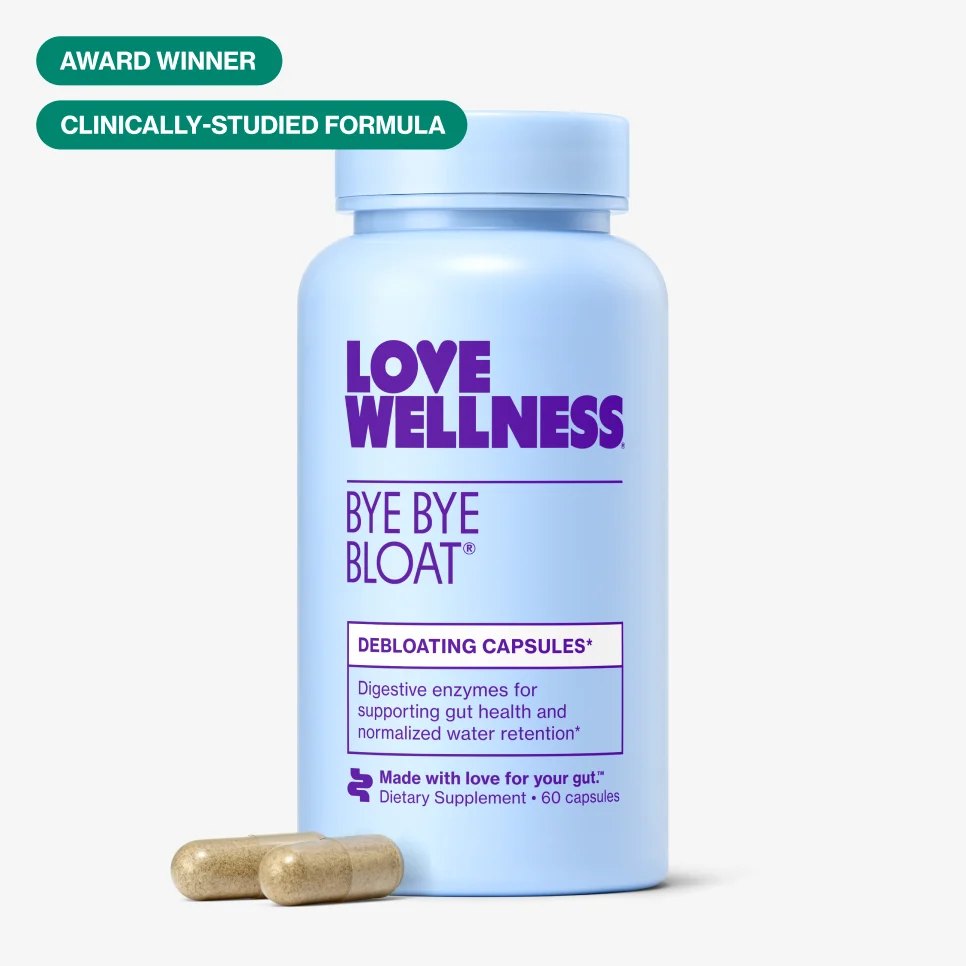
Bye Bye Bloat pairs digestive enzymes with botanicals and carries a clinically studied claim. Trace that one backward too, from capsule to harvest to drying and extraction.
Bye Bye Bloat is our widely shared bestseller. Retail copy describes a clinically studied mix of digestive enzymes plus botanicals that is free of gluten and dairy. Usage appears on the pack. Take 1 to 2 capsules following a meal or beforehand. Pricing at the time we checked was 24.99 dollars in standard size and 59.99 dollars in jumbo. That is what labeling establishes.
In reverse, there are two supply lines. Enzymes come from fermentation. They grow in vessels, pass through filtration, dry to powder and are tested for activity, which reflects function per milligram rather than mass alone. Botanicals come from cultivated ground. Leaf or root material is gathered on a recorded day, dried to manage moisture, ground, then processed with water or alcohol to a defined extract ratio. The ratio shows how much raw plant corresponds to one part concentrate. Powders are combined, analyzed, then moved to encapsulation where operators verify fill weight so each capsule carries a uniform mix. I formulated without sugar and to gluten free plus dairy free criteria, and I keep the other ingredients list brief enough to scan. The unclear stage matches much of the US supplement trade. I can link a lot to its ingredient vendor and a finished batch to its assays, yet I do not print the farm and plot for each botanical in each lot. That is the record to ask for.
Your promise is clean, clinically studied care for vagina, gut and hormones, guided by your microbiome. For Seed to Capsule readers, where exactly does Good Girl Probiotics begin, and what does standardization mean on that label.
The pH Balanced Cleanser is our leading body care product. Copy describes it as a clinically studied, OB GYN developed wash without added scent that suits sensitive skin. Standard size costs 14.99 dollars and jumbo costs 24.99 dollars. Directions are plain. Use on damp skin in the shower as an external vulva wash. The retail page notes gluten free, dairy free and vegan status.
The supply sequence is briefer than a capsule yet precise. Water, cleansing agents and moisturizing agents combine in a tank by batch, acidity is adjusted, then bottles are filled. Free of fragrance signals that no extra perfume was added, which counts because scent blends often irritate. I prefer to measure against EU cosmetic rules instead of older US drugstore recipes, since the EU limits or prohibits many cosmetic inputs still permitted in the US. I avoid sugar, scent, parabens and glycerin in intimate care because such materials can encourage unwanted microbes, cover odor, preserve in a manner I reject, or alter texture on delicate tissue. I also hold that gut, vaginal and hormonal links deserve care at the microbiome level instead of symptom cover alone. The bottle ranks each component from most to least. What labeling omits is the vendor for each cleansing agent and the audit trail behind it. Those details sit in factory files, not on the carton.
I saw room for a womens health brand that felt current and without shame.
Lauren Bosworth
The Killer boric acid suppositories and Flora Power probiotic suppositories feel distinctive and direct. How should a careful buyer read those labels, and what testing stands behind a vaginal suppository.
Some categories in wellness spread widely because they simplify routines. People naturally seek the shortcut. We keep hunting for the silver bullet and the simple path. Gummy vitamins sound appealing in concept, yet the reality reads otherwise. That is why we reject gummies as an effective carrier.
On a label, a gummy calls for sugars or syrups, flavorings and acids for chew, which crowds out actives and introduces daily inputs I prefer to avoid. The Supplement Facts section reveals it. Portions enlarge, sugars show up, and the other ingredients paragraph lengthens. A capsule or tablet can deliver a researched amount of enzymes, botanicals or strains with fewer excipients, and certificates can confirm count or activity without adjusting for confectionery texture. I value science. I value evidence. I value blinded placebo controlled trials, while staying receptive to observational work and reported experience. I sit in the middle of wellness arguments. So I stay with delivery types that keep testing legible. Capsules, suppositories, a plain wash. No extremes, no judgment, only formats where labeling can substantiate contents.
You critique gummy vitamins at length, saying humans seek the shortcut and the silver bullet and gummies sound great in theory but read very differently in reality. What is lacking in the format when viewed from a label perspective.
The Killer is a clinically studied, OB GYN developed vaginal suppository with boric acid that helps maintain a healthy vaginal setting. It retails at 17.99 dollars. It is used vaginally as directed. Flora Power is a suppository combining probiotic strains with vitamin C for focused vaginal pH care at the same price. Those details match the packs. I describe what the label carries and what the brand supplies.
A suppository has a tight chain because the form is uncomplicated. Boric acid powder is obtained to specification, checked for identity and purity, placed into shells at even fill weight, then reviewed for uniformity and release in laboratory files. Probiotic versions add verification of strain identity and count to expiry, plus vitamin C potency. Each lot ought to hold a certificate of analysis and, when stated, outside screening for heavy metals and microbes. I created these alongside physicians and tested them through separate clinical studies. A cautious shopper at home should start with the Supplement Facts or drug facts box, then review other ingredients, followed by use directions and cautions. Suppositories should not be divided or shared between users. Save the lot code in case a batch question arises. The remaining gap mirrors other categories. The mineral source behind boric acid and the tank site behind strains appear in vendor records, not on the box.
You are now found in Target, Walmart, CVS and Ulta, with millions of customers since 2016. What does scale alter for provenance, lot control and third party seals, and what would it take to show more.
Growth alters documentation before formulas. As Bye Bye Bloat, Good Girl Probiotics and the pH wash entered Walmart, Target and Ulta, batch sizes increased and record demands tightened. Every finished lot still requires its certificate of analysis, and retail accounts impose further compliance review. Outside seals vary in meaning, so I advise shoppers to inspect what a seal measured. Identity, strength, heavy metals, microbes. A badge on the front says little absent the assay behind it.
fuller picture would mean releasing vendor names, gathering or fermentation dates, extract ratios or strain levels, and certificate numbers lot by lot, and flagging vendor shifts over time. I prefer to pair blinded trials with open consideration of reported experience rather than reject either source, and I prefer care that feels current and free of judgment over rigid or shaming models. Serving women better since 2016 means crediting growers when possible and stating clearly when not yet possible. Where a stage stays opaque, the buyer should know which paper would fill the gap.
Closing note from the desk
What remains is a picture of shelves under bright light. A founder with unresolved symptoms studies the backs of packs and learns that scent and sweeteners carry consequences. That lesson now informs batch files and formula decisions more than any tagline.
Love Wellness aims to offer current care without judgment, centered on the microbiome, measured against tighter wash standards where US policy permits more. The trail is incomplete, as such trails often are. Strains and enzymes are verified by lot, botanicals note ratios, washes disclose full ingredient order. Growing sites and tank locations stay on file. The company reports what packs substantiate and points to records a shopper may ask to see.
Product spotlight
Bye Bye Bloat at 24.99 dollars standard and 59.99 dollars jumbo. A capsule mix of digestive enzymes plus botanicals presented as clinically studied and free of gluten and dairy. It is offered for fullness after eating. Take 1 to 2 capsules before or after a meal, per pack directions.
Good Girl Probiotics at 24.99 dollars standard and 59.99 dollars jumbo. A one a day capsule presented as a clinically studied, OB GYN developed vaginal probiotic with 9 strains for ongoing internal care. It is offered for routine vaginal support with digestive balance. Take 1 capsule daily, per pack directions.

Kristina Patel
Kristina produces the interviews at Root to Bottle: the research, the question lists, the follow-ups. She grew up on her grandmother's turmeric milk and still asks every founder where their plant was grown and who taught them to use it.
More from Kristina Patel →