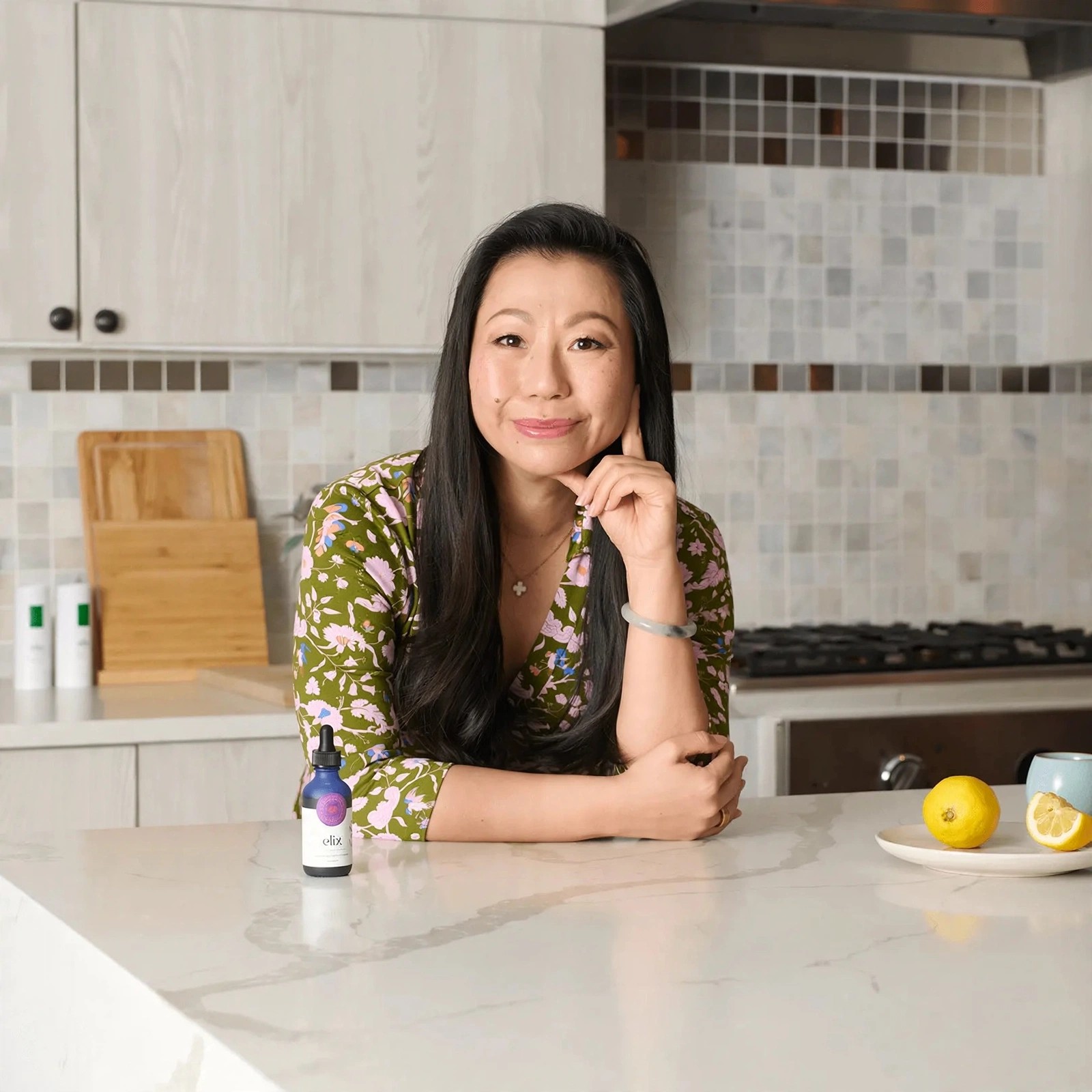
A paper sack of roots and twigs simmering on a stove in Shenzhen sits at the start of Elix. Founder Lulu Ge carried that daily decoction back to New York and asked how its plants, people and preparation could be kept intact inside an American bottle with lab paperwork. This talk follows the remedy route, from grower and herbal text to extraction, test and dropper.
In Shenzhen, Lulu Ge spent mornings watching twelve whole herbs reduce in water over many months. She had traveled to consult Dr. Xia Hongsheng after stabbing cramps, headaches, bloating, tiredness and sleeplessness that arrived after sixteen years using birth control. He felt her pulse, studied her tongue and prescribed a daily boil to drink at home.
Ge was born in China, grew up in California and now lives in New York City. As a child she never received Tylenol or Advil, while her grandmother simmered bone broth with ginseng or medicinal mushrooms. Her grandfather directed a hospital in Hunan. Later came ten years in consulting that left her persistently depleted, and a stop to prescription contraception that brought symptoms which physicians in the United States largely brushed aside.
Once home in the United States she could not locate those same plants organically grown in a clean and absorbable preparation. After surveying 246 clinical trials and studies, and running a pilot with over 300 women across close to a year, she introduced Elix in January 2020 as tailored herbal blends shaped by an online health review of around 50 questions with a tongue image. What draws Root to Bottle is the longer lineage behind that supply path, how harvested material becomes tincture, what the lab verifies and what current research can support.
You describe ten years in consulting that left you persistently depleted, plus stabbing cramps and sleeplessness after sixteen years on contraception that painkillers and fish oil could not steady. Why did a call home lead to a flight to meet Dr. Xia Hongsheng in Shenzhen.
As a child I did not reach for Tylenol, Advil, or Pepto Bismol when I felt unwell. That pattern was normal inside our home. My grandmother cooked bone broth with ginseng or medicinal mushrooms, and nourishment plus plants came first. That upbringing showed me that relief has a source you can name, a root or fungus or simmering pot, rather than a blank tablet with no origin.
Building Elix has felt like returning home and relearning the care carried across many generations in my culture. My grandfather directed a hospital in Hunan, so this work never felt theoretical. When I review a lot or batch today, I remain the child who asks where it was cultivated and whose hands touched it. I seek intact plants, organically raised when feasible, handled with restraint. If its path cannot be traced, I do not wish to bottle it.
The twelve herbs you boiled daily after Dr. Xia Hongsheng read your pulse and studied your tongue eased stabbing pain within a month and calmed most symptoms within months. What had your grandmother’s broth with ginseng or mushrooms taught you long before that about where medicine begins.
I had already tried the items stocked nearby. Painkillers, fish oil, cycle supplements, even a buzzing device. None lasted. Clinicians brushed off my pain or advised resuming birth control, which sounded like covering discomfort instead of comprehending it. I recognize that 55% of women in the U.S. say a medical provider has made them feel dismissed at some point, and my appointments echoed that pattern.
Then my mother spoke about my concerns with my grandfather, who introduced me to Dr. Xia Hongsheng in Shenzhen. He felt my pulse, examined my tongue and directed twelve herbs to simmer each day. The following cycle my sharp pains lessened, and within several months nearly every symptom faded. That steady habit of simmering and sipping gave me space to observe gradual shifts, as plant preparations act. Would you expect transformation from a single kale salad or one cup of blueberries, or from a single gym session. Steady use counts.
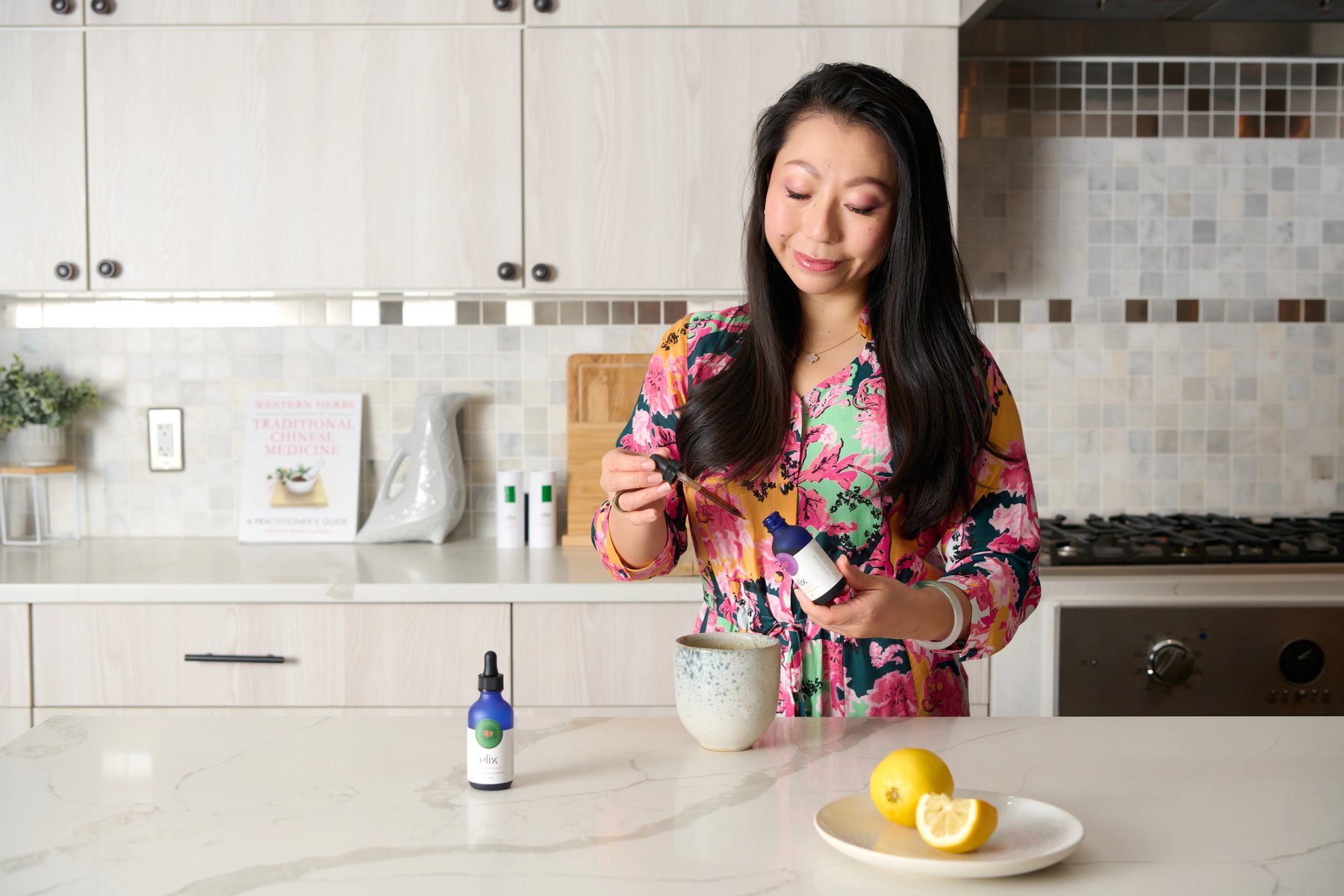
Your assessment with around fifty questions plus a tongue image was shaped with Dr. Xia after surveying 246 clinical trials and testing with over 300 women. How did a pulse and tongue appointment become an online form.
At Elix, we translated that appointment into an online health review to widen entry to Traditional Chinese Medicine. We partnered with Dr. Xia and examined 246 clinical trials and studies to form the reasoning. The review poses close to fifty queries on cycle timing, flow, color, clots, digestion, slumber, stress and warmth patterns, and it requests a tongue image.
Within Traditional Chinese Medicine, tongue observation serves as an outward sign of inner balance, including indications such as heat and dampness. We apply root and branch reasoning to group signs into patterns instead of chasing a single complaint alone. In Western medicine, the habit is often to address the symptoms, not the root. While a Chinese medicine view addresses the body as an integrated whole. After testing with more than 300 women over nearly a year, we started in January 2020 with tailored mixtures of as many as eighteen herbs.
Elix describes organic intact plants prepared separately with low slow extraction, then simmered and combined as liquid tinctures with no fillers. Can you trace that movement from grower sack to bottle and say why liquid instead of pills or powders.
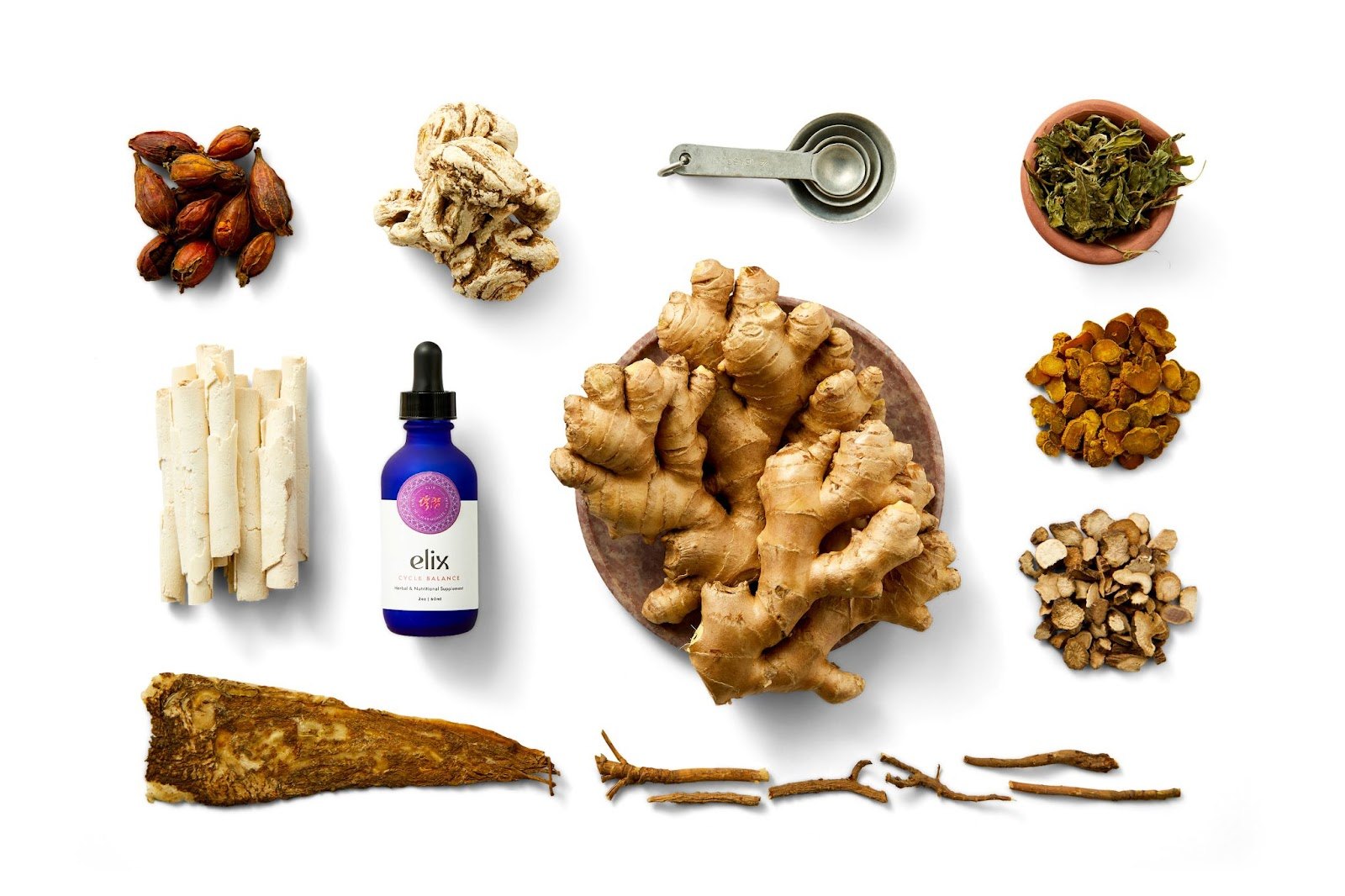
We begin with organic intact plants from cultivators listed by name on our herbs page, and every plant is handled apart. Certain parts call for extended simmering, others call for gentler warmth, so we hold them apart until extraction closes. Gentle prolonged extraction means heating in liquid across time to pull constituents into solution, then joining those solutions into a tailored blend. That reason guides us to bottle a tincture and not a powder.
I decline pills and powders carrying fillers and synthetic carriers because they lend bulk with no purpose. A tincture delivers the drawn liquid in direct form, and a dropper keeps daily amounts precise. Mass inside a capsule reports how much powder sits within. Measure in a tincture reports the proportion of plant to liquid and the drops in each serving. We hold the other ingredients list brief and state that outside labs check purity and potency. For a shopper who studies the Supplement Facts panel, those records carry more weight than praise.
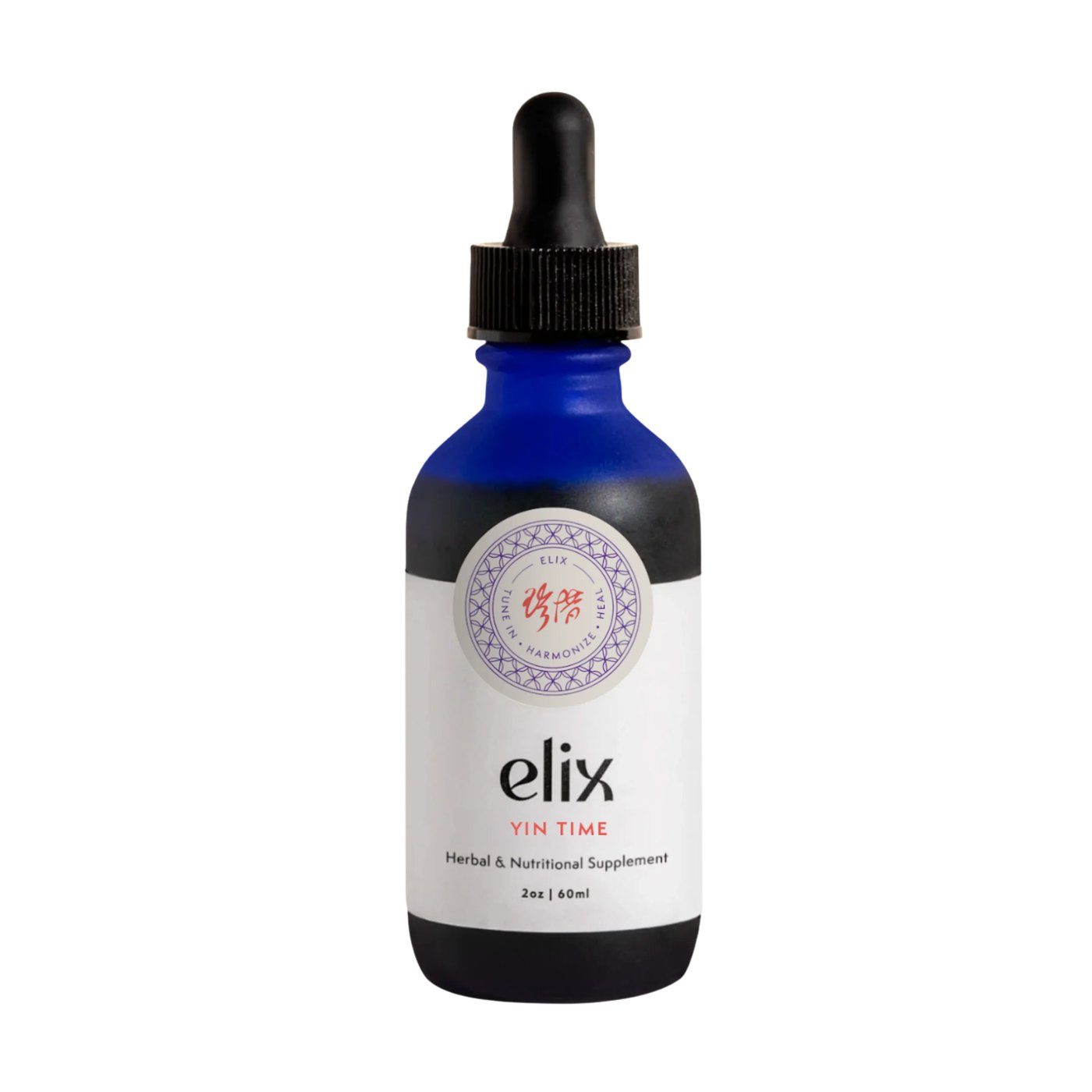
Yin Time at 38 dollars grows from Suan Zao Ren Tang and adds Reishi, sipped at night as a settling ritual. Why did rest become a best seller beside cycle blends, and what sits at its source.
Rest surfaced in nearly every review. Women described busy minds, thin slumber and unsettled nights around bleeding weeks and during strained months. Yin Time responds to that night interval. It grows from Suan Zao Ren Tang, a traditional formula, joined with Reishi, a medicinal fungus raised on wood or substrate, then gathered, dried and drawn out before mixing.
We speak of yin time because Traditional Chinese Medicine splits the day between lively yang hours and restoring yin hours. Directions stay simple. Sip nightly as a settling ritual to drift toward sleep. It borrows the mood of a wine pour at dusk, with no alcohol. I hold deep trust at the meeting place of East and West sciences, so we preserved the old architecture and recorded origin and checks in a manner a careful reader can follow.
I look for whole herbs, grown organically when possible and prepared simply.
Lulu Ge
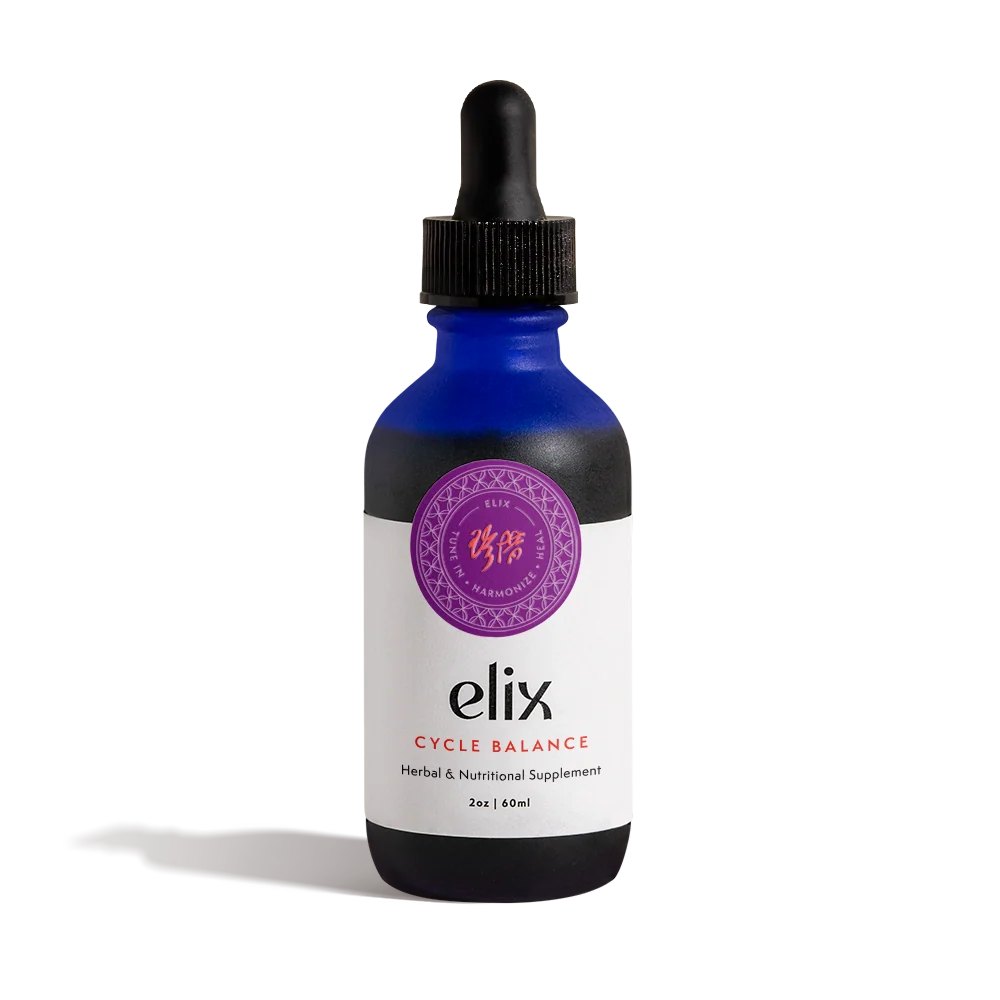
Your anchor remains Cycle Balance One Month at 52 dollars, a tailored mix of as many as eighteen herbs. What shifts in the blending room when every bottle follows a pattern rather than one fixed recipe.
A fixed recipe allows purchase of one large lot, a single extraction and fill of thousands of matching bottles. Tailoring inverts that order. Each request begins with an assigned pattern, then we draw from separate plant extractions to combine as many as eighteen herbs for that individual. The bench acts closer to a compounding pharmacy than to one long run.
That structure raises tracking labor. Every single plant extract holds its own certificate of analysis, and each finished mixture bears its own batch entry. Daily practice stays plain. Complete the online health review and place the tailored liquid drops in the mouth each day. Yet beneath that ease sit stocks of many single plant liquids, brief blending rounds and exact labeling so each bottle aligns with its pattern. We prefer tailoring blends through pattern assessment over offering one size fits all wellness. That decision adds hours and checks, so the supply chain must stay precise.
Craving Support at 38 dollars points to a classic formula from 1100 AD and your site wording mentions metabolism. As a journal of plant lineage we must ask what the label states and what it omits.
The label lists an organic plant mixture grounded in a classic Chinese Medicine formula from 1100 AD, with serving amount, plant roster and other ingredients. It claims support for metabolism with daily use. What it omits matches what all supplement labels omit. It does not print the grower lot, the extract ratio or the certificate of analysis. Those details rest in our inner batch files and in summaries on our herbs page.
I keep our organic gingerade with me whenever I leave home, and I use our blends with that same everyday rhythm, yet I will not state that a tincture treats illness. The wording on the Elix site has not been evaluated by the FDA and products are not intended to diagnose, treat, cure, or prevent any disease. What I can defend is method. Organic intact plants, gentle prolonged extraction, brief blended lots, outside checks for purity and potency, and a label that names contents without fillers.
You often speak of widening entry to Traditional Chinese Medicine and heeding the body. Which link in your chain stays least visible, and what would full openness require.
Lot level farm identity remains the hardest link. We can list cultivators and present outside checks for purity and potency, covering heavy metals and microbes. What we do not yet print per bottle is the field, harvest date and lab sheet for that exact mixture. Tailoring across many plants complicates the task, since a single bottle may unite more than a dozen lots.
Full openness would call for lot level tracing shown or scanned per order, from cultivator to extraction to bottling or encapsulation. That entails harvest notes, drying records, extraction logs and laboratory reports linked to one batch code a buyer can search. I deeply hope Elix can serve as a trusted friend and adviser, from your first periods, to your last hot flash and everything in between. Sharing that full path is how a friend earns confidence.
You often close by saying care does not begin with another person’s endorsement, it begins with attention. For a home buyer tending a modest shelf for years, how should they study your label and judge whether the dearer option proved worthwhile.
Care does not begin with another person’s endorsement. It starts with attention. Examine the Supplement Facts panel first, then the other ingredients line. Seek organic intact plants, the format as tincture or tea, the serving amount and the daily guidance. Seek a note about outside checks for purity and potency. Track your own notes across two to three cycles on flow, cramps, slumber and stress, because pattern support moves slowly.
We began with Cycle Balance, then introduced everyday teas such as Bloom and Balance to promote hormone cycles, manage stress and boost immunity, steeped as a mindful ritual, plus Yin Time as a night option. Purchase for the pattern present now, use it steadily, and weigh records, not adjectives. If a company can identify growers, outline extraction and publish test summaries, that traceable record forms part of the value received.
Closing note from the desk
What lingers is a simmering pot. Ge heated twelve herbs each day in Shenzhen, sensed easing across months and then wondered why no American shop offered that same sack with clear sourcing and lab files. That inquiry shaped a review, a blending bench and a testing archive.
Elix was formed to widen entry to Traditional Chinese Medicine with tailored blends free of fillers, followed from cultivator through extraction to batch. Some stages stay summarized instead of searchable, and the company names that limit openly. On a crowded herbal shelf, that candid record matters.
Product spotlight
Cycle Balance One Month, 52 dollars for a tailored one month supply. A liquid tincture joined from as many as eighteen organic intact plants following an online review of around fifty questions with a tongue image. Place the measured drops daily for steady practice and follow cycle signs over two to three months.
Yin Time, 38 dollars for a bottled night blend. An organic evening preparation grounded in Suan Zao Ren Tang and joined with Reishi fungus, sipped nightly as a settling ritual to move toward rest. A dusk pour mood without alcohol, stored on the evening shelf near tea.

Kristina Patel
Kristina produces the interviews at Root to Bottle: the research, the question lists, the follow-ups. She grew up on her grandmother's turmeric milk and still asks every founder where their plant was grown and who taught them to use it.
More from Kristina Patel →